Eyes, JAPAN
Rebel Against Streaming Services
zeke
Rebel Against Streaming Services
Everything requires a subscription now. Netflix, Disney+, Hulu, HBO Max, Amazon Prime—the list keeps growing, and that is only for movies and television. Music, cloud storage, video platforms, productivity software, even AI tools all demand a monthly fee. At this point, subscriptions feel unavoidable, almost like a tax on simply existing in the digital world. In many ways, modern life has shifted from owning things to renting access indefinitely.
This subscription-first model has quietly become the default business strategy for nearly every major company. Movies require a subscription. Music requires a subscription. Saving photos of your own life requires a subscription. Even content that once existed as physical media—DVDs, Blu-rays, CDs—has been transformed into something temporary, something that can be revoked at any moment. What was once a purchase is now a permission slip.
The problem is not just the cost, although that alone adds up quickly. The deeper issue is ownership. Or rather, the complete lack of it.
When we subscribe to a streaming service, we do not own the movies or shows we watch. We are merely granted access, and that access exists entirely at the mercy of corporations whose priorities rarely align with those of the consumer. Licensing deals expire. Content is quietly removed. Entire libraries disappear overnight. A show you loved last year might be gone tomorrow, not because it lost cultural value, but because it no longer fits a company’s profit model.
In this system, consumers have lost power. We depend on platforms that can rewrite history with a server update. If a company decides that hosting a thousand episodes of a long-running series like One Piece is no longer profitable, they can remove it without consequence. The media is gone, not just from that platform, but often from legal access entirely. There is no guarantee it will return. There is no obligation to preserve it. And there is nothing the audience can do about it.
This is especially alarming when we remember that media is not just content, it is art. Movies, television shows, and music are cultural artifacts. They capture moments in time, reflect social values, and form emotional connections with the people who experience them. For many of us, certain shows or films are tied to childhood, family, friendships, or difficult periods of life. They are memories as much as they are entertainment.
Yet we are treating this art as disposable.
Digitalization has undeniably made media easier to access. With a few clicks, we can watch almost anything, anywhere. But that convenience comes at a steep cost: permanence. Physical media could be stored, passed down, and preserved. A DVD on a shelf did not vanish because a contract expired. A CD did not stop working because a company changed its business strategy. Ownership meant control, and control meant continuity.
This is where self-hosting becomes an act of rebellion.
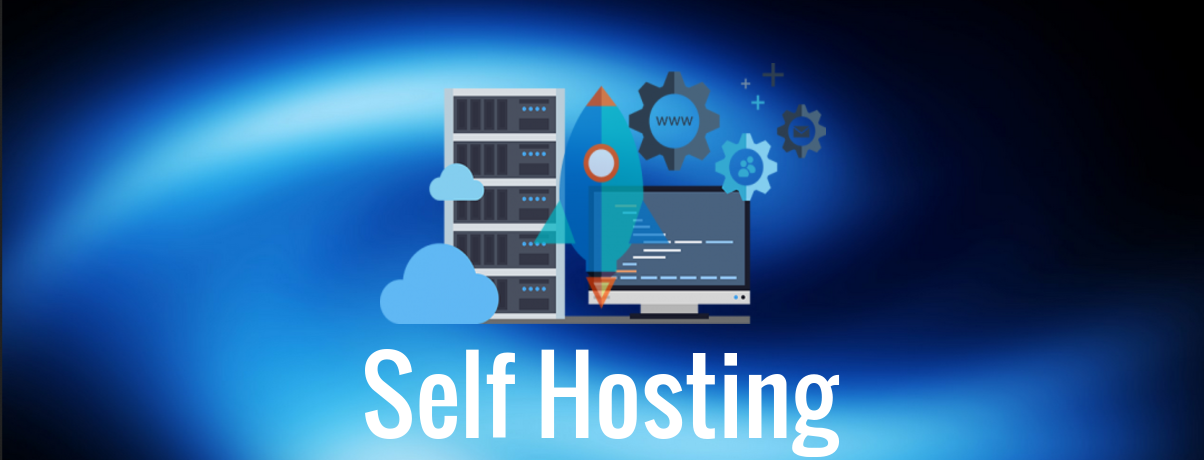
Self-hosting media, storing your own collection on personal servers or local storage, is a way to reclaim ownership in a world that increasingly denies it. It is a refusal to accept that the art we love should exist only at the pleasure of corporations. By hosting our own media, we ensure that it cannot be taken away, altered, or erased without our consent. We become curators of our own digital libraries rather than passive consumers.
More importantly, self-hosting is about the future. One day, I would like to share the movies and shows that shaped me with my children. I want to show them the stories that made me laugh, cry, and think differently about the world. I do not want to rely on whether a streaming service still exists, still holds the rights, or still cares. Memories should not be subject to licensing agreements.
Preserving media is preserving culture. When everything lives behind subscriptions, culture becomes fragile. Art becomes temporary. History becomes editable. Self-hosting pushes back against this trend by treating media as something worth keeping, not just consuming.
Rebelling against streaming services does not mean rejecting convenience entirely. It means recognizing that convenience should not replace ownership. It means understanding that art deserves longevity, and that our memories deserve stability. In a world where everything is rented, choosing to own,even digitally,is a quiet but powerful act of resistance.
Take back control

For those who want to take back control, self-hosting media has never been more accessible. Open-source platforms like Jellyfin allow anyone to create their own personal streaming service, free from subscriptions and corporate oversight. With a basic computer or home server, users can store movies, shows, and music and stream them to their devices just like any commercial platform, except this time, they actually own the content. The open-source nature of tools like Jellyfin ensures transparency, longevity, and community-driven development, rather than dependence on a single company’s profit motives. What once required technical expertise is now approachable, well-documented, and supported by passionate communities. By choosing to own and care for our media, we ensure that it can be shared, remembered, and passed down. In a digital age defined by renting everything, taking control of what we love is not just practical—it is an act of preservation.
- Tweet
-

 2026/02/27
 2025/12/12
 2025/12/07
 2025/11/06
 2025/10/31
 2025/10/24
 2025/10/03