人工知能
From Hype to Impact: What the 2026 AI in Healthcare Report Reveals
Yiyan
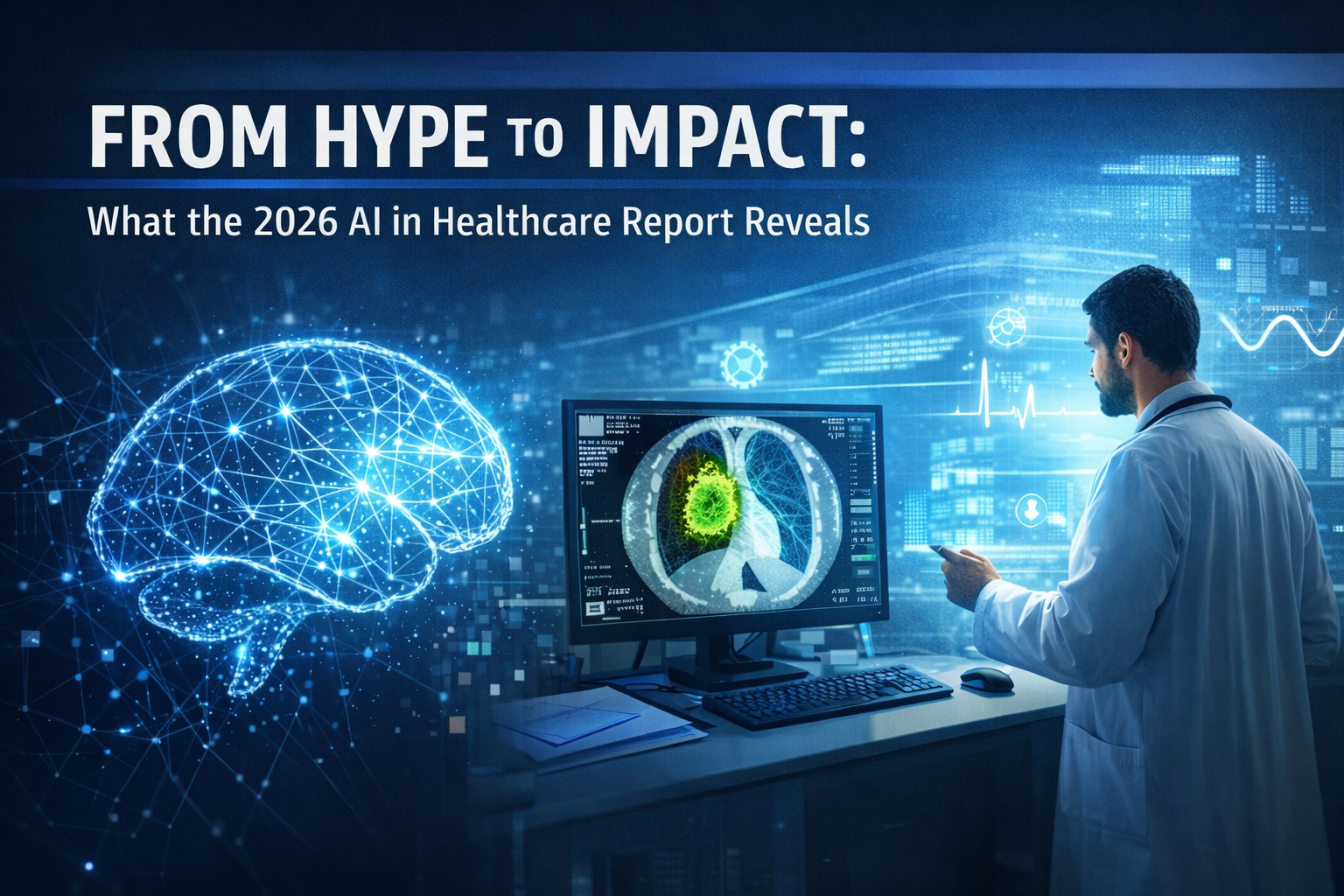
Artificial intelligence has been widely discussed in healthcare for years, but the latest 2026 State of AI in Healthcare and Life Sciences report by NVIDIA suggests that the industry is entering a new phase—moving from experimentation to real-world deployment.
Healthcare organizations are no longer just exploring AI. They are increasingly integrating it into clinical workflows, research pipelines, and operational systems.
AI Adoption Is Rapidly Increasing
According to the report, 70% of healthcare and life sciences organizations are actively using AI, up from 63% the previous year. In addition,69% are already using generative AI and large language models.
This rapid growth shows that AI is becoming a core part of healthcare technology infrastructure rather than a niche research tool.
Interestingly, adoption is expanding even among traditionally slow-moving sectors such as hospitals, healthcare providers, and insurance organizations.
Predictive Analytics Still Drives Most Healthcare AI
While generative AI attracts significant attention, the report shows that predictive analytics and data science remain the backbone of healthcare AI systems.
About 65% of organizations use AI for data analytics, and 42% apply AI to clinical decision support.
These technologies power many of the most impactful healthcare applications, including:
- medical imaging analysis
- disease risk prediction
- personalized treatment planning
- drug discovery
Rather than replacing medical professionals, AI is increasingly being used as a decision-support tool that enhances clinical insights.
AI Is Already Delivering Real Business Value
One of the most notable findings in the report is that AI is already delivering measurable business outcomes.
For example:
- 57% of medical technology companies report ROI from AI in medical imaging
- 46% of pharmaceutical companies report ROI from AI in drug discovery
Beyond research applications, many organizations are also using AI to improve internal operations such as administrative automation, workflow optimization, and clinical documentation.
These improvements help reduce operational costs while increasing productivity.
The Emergence of AI Agents
Another emerging trend highlighted in the report is the rise of AI agents—systems designed to autonomously reason, plan, and execute complex tasks.
Nearly 47% of organizations are already using or evaluating AI agents.
Current use cases include:
- knowledge management
- literature analysis
- clinical documentation summarization
- patient-facing chatbots
In pharmaceutical research, AI agents are even being used to assist in drug discovery and biomarker identification.
This suggests that the next stage of healthcare AI will involve more autonomous and collaborative AI systems.
Looking Ahead
Healthcare AI is entering a stage where organizations are focusing on scaling proven solutions rather than simply experimenting with new technologies.
The report indicates that 85% of organizations expect their AI budgets to increase in 2026, reflecting strong confidence in the value of AI.
As AI continues to evolve, the future of healthcare may involve intelligent systems capable of analyzing complex patient data, supporting clinical decision-making, and improving healthcare delivery at scale.
For technology professionals working at the intersection of AI and healthcare, this transformation is only just beginning.
- Tweet
-

 2026/03/06
 2024/05/10
 2023/04/21
 2021/10/29
 2020/08/21
 2008/11/11